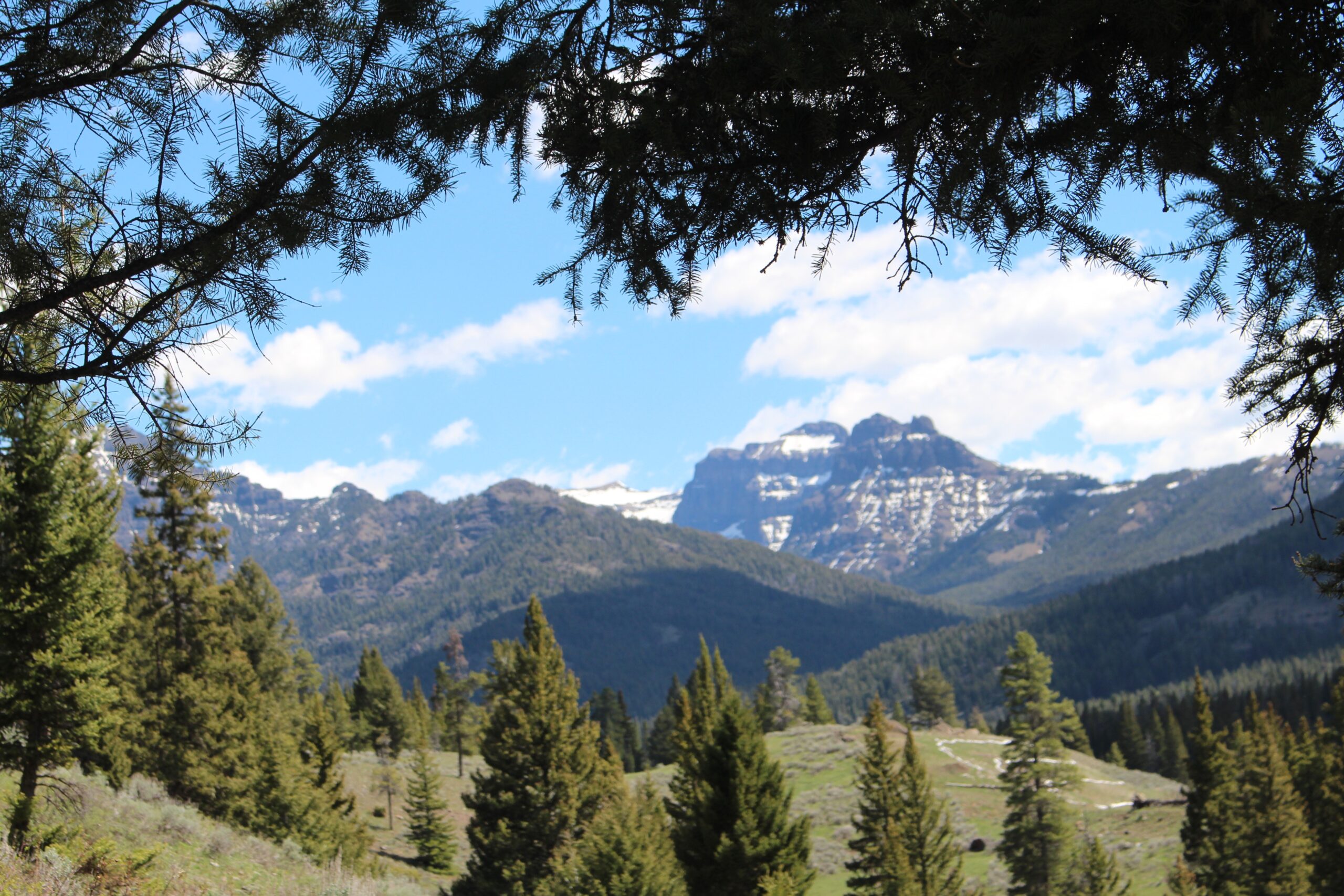
While parts of the area are difficult to access, it’s easy to “fall” for the breathtaking beauty.
My husband and I have taken many road trips throughout Texas, hiking at scenic spots such as Guadalupe Mountains National Park, Big Bend National Park, and Palo Duro Canyon State Park. There’s a lot to see and do in Texas. In April, however, we ventured to an adjacent state. In about the same amount of time it took us to reach the aforementioned Texas parks, we arrived at Boxley Valley, Arkansas. Although the area had been suggested by a friend who is from Arkansas, we weren’t fully prepared for the natural beauty that awaited us.
Buffalo National River
In 1972, the Buffalo River became the first national river. Now managed by the National Park Service (NPS), the Buffalo National River remains one of the few undammed rivers in the contiguous 48 states. Meandering through the Ozark Mountains for 135 miles, it is popular among people who like to float down the river. It’s not hard to find outfitting companies that provide canoe and kayak rentals.
Elk graze along the riverbank. According to the helpful people at the Arkansas Game and Fish Commission’s Ponca Nature Center, the seven-mile strip along the Buffalo National River between the tiny towns of Ponca and Boxley is considered one of the best places in Arkansas to view elk from the safety of an automobile. At dawn and dusk, elk are often spotted in the verdant pastures along the river. Be careful! Elk sometimes cross the road.
We saw plenty of elk on our spring trip, but to see impressive antlers visit in the fall, because elk shed their antlers in early spring before growing them again during the late spring and summer. In the fall, visitors also have the opportunity to hear the bull elks’ impressive bugling as they attempt to gain the affection of the cows—and might even see them battling with their long antlers.
If that’s not enough to make a trip seem worthwhile, consider that the mountain creeks which feed into the Buffalo National River are known for a proliferation of waterfalls. They are especially impressive in the spring. According to Tim Ernst, author of Arkansas Waterfalls, “The Buffalo River region in northwest Arkansas is a land of towering limestone and sandstone bluffs, caves, springs, rivers, and countless waterfalls.”
Some of these waterfalls are hiking destinations. One of our favorites was Glory Hole Falls, which is one of the most easily recognized waterfalls in Arkansas. Water pours through a hole in the roof of a cavern, and hikers can view this spectacle from above and below. The out-and-back hike is rated “moderate” in difficulty. It is about two miles roundtrip and features a muscle-burning uphill section on the way back to the trailhead. There were slippery rocks to navigate, but we took our time and managed to return to our vehicle without injury. It was worth the walk.
Twin Falls (sometimes called Triple Falls) was our favorite waterfall. It is located on the edge of the Boy Scouts of America’s Camp Orr. The road to the trailhead is treacherous, and we found ourselves wishing our vehicle had four-wheel drive. The walk to the falls, however, is short, and we knew we were getting close when we could hear the roar of water. The scene is breathtaking: water pours over a cliff in three distinct streams nearly 50 feet before splashing in a pool below.
Eden Falls is also a popular destination. The trail begins at the Lost Valley Trailhead, which is managed by the NPS. The hike allows people to see several named waterfalls, as well as many unnamed ones, including one in a cave. (The rocks at the mouth of the cave looked quite slippery, and the trip necessitated a jump over a stream, so we decided to bypass the cave waterfall.)
Meanwhile, we also decided against attempting the hike to one of the most well-known waterfalls in Arkansas, Hemmed-in Hollow Falls, which is in the area. The water cascades more than 200 feet, making it the highest waterfall between the Appalachians and the Rockies. The NPS warns that the hike to access Hemmed-in Hollow Falls is on an “extremely steep and strenuous trail that will humble even the most experienced hiker.” Noted. (One website mentions an easier hike, but it is only accessible during canoeing season—March through June—by floating the upper Buffalo River.)
The creeks that provide the water for destination waterfalls contain many smaller, unnamed falls. We lost count of the waterfalls we saw in just a few days of hiking. Thankfully, I had a well-charged camera battery. Everywhere I looked, I seemed to find a photo opportunity.
You Can’t Get There from Here
One of the first things we discovered on our trip was that some hiking destinations seemed to exemplify Gary P. Nunn’s song You Can’t Get There from Here. One situation was almost comical: according to Google Maps, Eden Falls was a scant .7 mile from our cabin. Our Airbnb host pointed out the location but warned the area is “muddy and snaky.” (Nope.) To get to the trailhead, we drove 9.9 miles, which took nearly 25 minutes, but it was worth the trip.
Also, be aware that, because of the mountainous terrain, roads in the area are serpentine and change in elevation. Many road signs warn the roadways are “crooked and steep.” We are used to the wide, open spaces of Texas, where a 20-mile drive takes about 20 minutes (even less when headed toward west Texas on I-10); however, in this mountainous region of Arkansas, a 20-mile trip takes about an hour.
More than once, we wished we had a four-wheel drive vehicle, and we quickly discovered we needed to do our research before driving to a trailhead. Not only were some access roads steep, many were unpaved, and some trailheads had little or no parking available. Fortunately, Arkansas Waterfalls (available on Amazon) gives pertinent details about 200-plus waterfalls, including more than 60 in the Buffalo National River region. The book provides photos, plus detailed directions to trailheads, parking information and the GPS coordinates of waterfalls, as well as difficulty ratings of hikes. Don’t worry: some waterfalls can be seen from vehicles or after easy hikes of less than a mile. Some trailheads have adequate parking, too.
We also observed that cell service in the area is spotty (sometimes nonexistent). We learned to take careful written notes of our directions before leaving our cabin, because Google Maps often became confused when cell service flickered.
One of the most surprising things about our visit was the lack of commerce in the area. We saw many isolated farms, but we never saw a single grocery store. We were glad we had stocked up on groceries before we arrived; otherwise, we would have had to drive for more than a half hour on snaky roads to find one. Furthermore, there were few restaurants. We saw only one or two. Gas stations were equally hard to find, so we were relieved we had topped off our tank before we plunged deep into mountain territory.
Much of the land in the Buffalo National River area is privately owned; our Airbnb host told me her farm has been in the family for nine generations. The farm has serene mountain views and lush grass, where healthy cows graze. Elk sometimes visit. She said, “I don’t know why I am the one who gets to be so blessed.” For once, I thought of the right thing to say. I told her, “Just be grateful.”
For more information, visit nps.gov/buffaloriver.