What if being a granddad isn’t simply a stage of life, but a calling to bless, guide, and shape the generations that follow?
Nick Stevens grew up in Texas and began his career by serving as a youth minister at a Houston area church and teaching math in high school just down the road in Spring, Texas. Even though he grew into a primary career with 40 plus years of experience in IT and project management, teaching has remained a passion, both within that career field and with periods of college-level instruction and serving as an adjunct professor.
He has deep-rooted faith. While he credits this in part to coming from a family of ministers, Nick has leaned into God through multiple tragedies in his life that may have caused others to distance themselves. When he was 25, he lost his minister father in a plane crash. His daughter Lygon was killed in an avalanche in the mountains of Colorado, and his first wife Sarah died after a battle with cancer. After Lygon’s death, he powerfully opined, “If we can’t keep an eternal perspective and find joy through these trials, our faith means nothing.” He knows through experience that Jesus does some of his best work in storms.
Nick has a passion for fatherhood and for helping others understand the fatherly nature of God. For years, he has taught studies and spoken publicly on the subject. More recently, that passion took on a new focus as he explored the unique role of grandfathers, leading him to write his first book, The Art of Being Granddad.
First things first. After this amount of time, do you still consider yourself a Texan?
I consider my roots are Texan, very much. I have been in Colorado for 30 years. And then if you tack on 15 in Montana, the Rocky Mountains are more my home than anywhere else. And now with my daughter and late wife both buried in Estes Park, Colorado, Colorado is definitely where I want to stay.
Why a book on the role of grandfathers?
In the Bible, we see the idea that a father leads the family and sets a vision for who his family will be. That combination of the history of fatherhood, along with becoming a granddad, and then seeing the absence of any material about grandfathers and what that role is, all those things just came together into the message of this book.
I have conversations with multiple granddads who repeatedly talk about how nothing in their life has been more satisfying or brought so much joy as being granddad. And I would ask them, “What does the role of granddad look like?” And they just kind of roll up their shoulders and say, “I don’t know what the role is. I just go along with Grandma.”
I think it is a unique perspective from the standpoint of trying to focus on the men and the masculine role. That’s not talked about at all really in our culture, period. God did not create parents. He created fathers and mothers. And that’s a different thing altogether. So, what’s the role of granddad? Other than going along with grandma, whatever she wants to do, and being friends with the kids, no one knows how to describe granddad’s role. But it’s much more important than that. Legacies are more important than that. You must get beyond what grandma wants to do to get to legacy.
Nick pauses the phone interview for a moment and apologizes for the noise in the background, explaining (with appropriate timing), “That destruction you hear in the background…we’re watching our grandkids right now.”
I see so much power in intergenerational conversation. A 25-year-old father often doesn’t have enough life experience to have the right perspective. Granddads specifically have a different perspective about life’s priorities than they did when they were 30. They admit it. And nine times out of ten, those men—successful men, powerful men—will tell me, “If I had to do it over, I would spend more time with my family.” That is just one illustration of the perspective a a grandfather can bring to a father who hasn’t yet lived long enough to gain the wisdom that comes from years of listening to Father God.
You point out, “This is not the art of being a granddad. It’s the art of being Granddad. Expand on that.
The distinction there is this thing I call identity. When I held my granddaughter for the first time, there was this realization that I changed. I love this role. And the people who love me the most in the world now are these grandkids. They don’t know who Nick Stevens is. They only know who Pawpaw is. Pawpaw is this identity. And it changes how I live my life a little bit. It is this transition from “not a description of things I’m supposed to do or things I can do,” but it’s this identity of what I need to represent now in this intergenerational family.
I’ve entered into this role, this position God has given me as the oldest man in our family, with a responsibility for the heritage and legacy of who our family is. So being a grandfather has become an identity for me, rather than simply a description of what I do.
One thing that immediately drew me to your writing was the “tools” at the end of the chapters…that is gold—taking it from thinking about it to doing something about it.
My writing coach said very early on, “Nick, whenever we’re in a conversation, I just get excited with what you’re talking about. And then I read your book and I’m like, ‘This is boring.’
She said, “You’ve got to learn how to pontificate less and paint more.” And that just has stuck in my soul deeply, because I have pontificated throughout my life. Anybody that knows me knows I can talk all night long.
Learning to “paint more” shaped a couple of things in the book. Part of it was helping granddads learn how to tell their own stories, but I also wanted to illustrate what these ideas actually look like in real life.
That led me to gather as many examples as I could from other men. As I read their stories and experiences, I began organizing them into practical tools that a granddad could use for a specific purpose rather than simply read and move on.
What do you have planned for future projects?
I have started collecting stories for a future work, The Art of Granddad’s Bedtime Stories. Anyone can tell bedtime stories, but I think this will be more fun and effective as far as relationship building.
I also have another book in mind on the Apostle Peter and childhood development. When he wrote 2 Peter, his letter to the churches, I think he was Granddad. I want to explore his words through that lens; as a granddad talking to his children and passing wisdom on to generations coming behind him.
Peter writes, “Add to your faith virtue, to virtue knowledge, to knowledge self-control…and continues through what I see as eight building blocks of character. I have a lot of material around the idea of Granddad Peter passing those principles on to his grandchildren. To me, there is a progression there that parallels childhood development. These qualities build on one other sequentially, and I believe the order matters.
Do you have a secret to offer on hearing the voice of the Spirit?
That is a beautiful and deep and powerful conversation or question. I’ve walked in different church faiths, so I’ve seen a lot of different people’s perspective about that question.
We know that we are spirit, created in the image of God, and that He lives with us. But we also live in these fleshly bodies. To me, it’s like this earthly body is a rock concert, and I’m trying to listen to a quiet voice whispering to me in this rock concert. It is really, really hard.
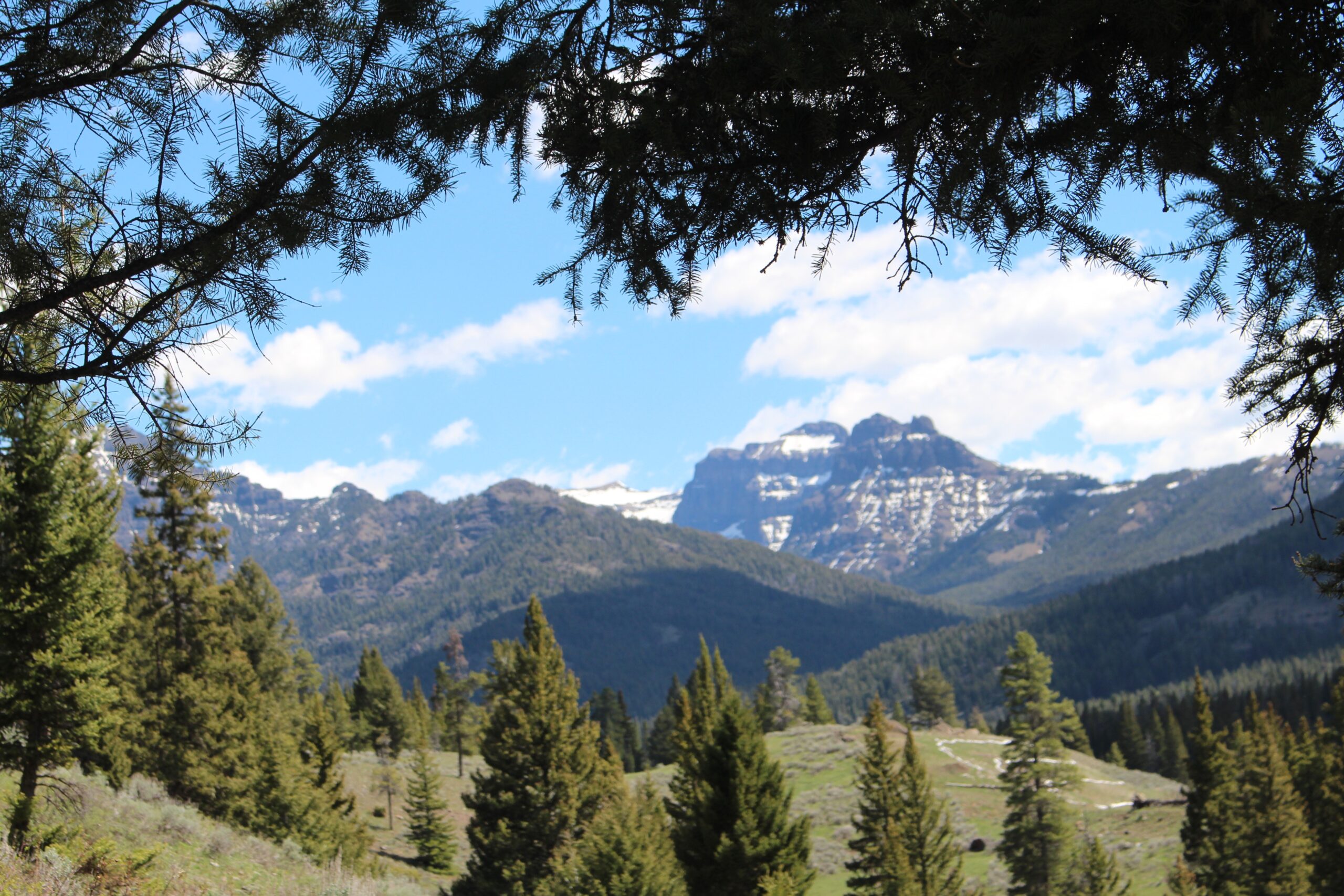
For me, I hear Him most clearly in the mountains. I have climbed over twenty 14,000-foot peaks in Colorado. When I’m there, away from all the noise, I begin sensing things within me that are life-giving and help me understand what I am supposed to do and what really matters. It’s not necessarily something my brain has come up with. It’s something coming from my spirit. Spirit recognizes spirit.
I believe there is something about the role of a father—and, as generations continue, the role of a grandfather—that reflects something of the nature of God. If we as men can learn to live that out well, we have the opportunity to impact generations.
And I believe our God, who is Spirit, desires to be known as Father. He wants our culture, all of mankind, to know that He is available to us as a good Father. As I’ve listened for HIs Spirit, He has given me many of the words and ideas you see in the book.
Nick and his wife Cindy live in Loveland, Colorado. Together, they have six children and seven grandchildren, whom Nick lovingly refers to as “the stars in my crown.” His book, The Art of Being Granddad: 7 Blessings Your Family Needs from You, is available on Amazon. Learn more at nickstevensauthor.com.